The Rest is Silence - John Dowland and his contemporaries
In 2026 the musical world commemorates the four-hundredth anniversary of John Dowland’s death, a figure whose name is inextricably linked with the golden age of the English lute song. To honor this milestone, guitarist and lutenist Domenico Cerasani presents the project The Rest is Silence, a program conceived for voice and lute as well as for lute solo, dedicated to Dowland and some of his most distinguished contemporaries: Thomas Campion, Robert Jones, and Thomas Morley.
The title evokes the Shakespearean atmosphere of the late Elizabethan and early Jacobean period, explicitly recalling Hamlet’s final words, and situates the listener within the poetic tension between sound and silence, music and mortality, love and transience. Each piece in the program is a miniature masterpiece, characterized by a kaleidoscope of affetti, at once refined and immediate, mirroring the artistic ferment of the time.
The Artists
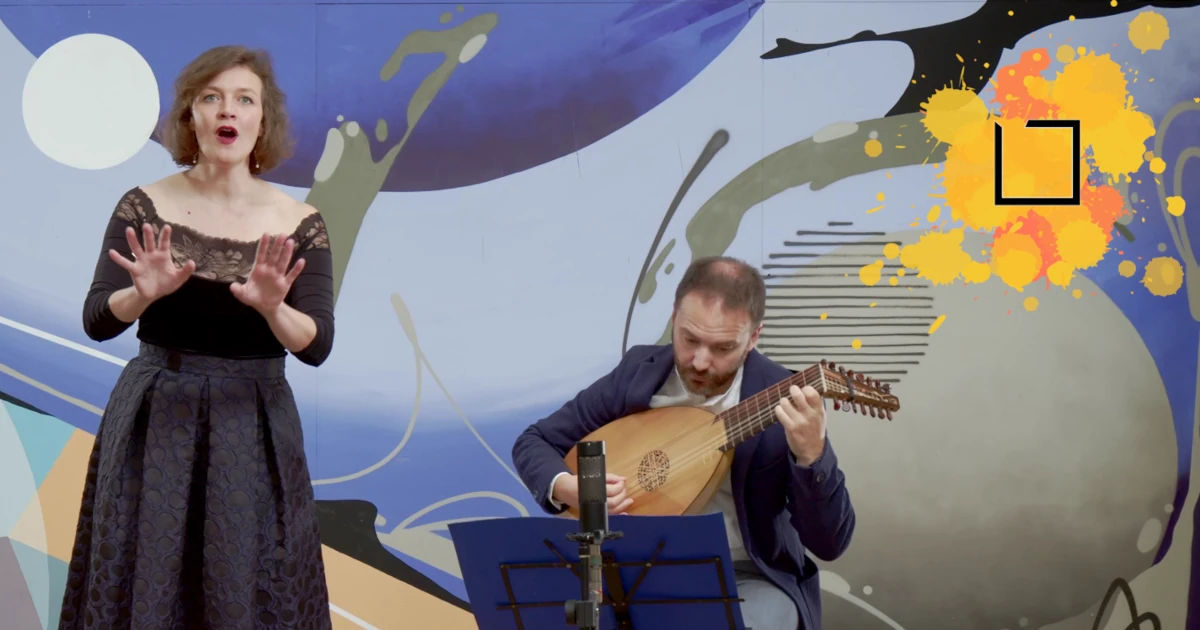
Domenico Cerasani, praised for the elegance of his phrasing and the rare sensitivity of his touch, has devoted himself to the rediscovery and dissemination of the lute and its repertoire. His artistry is marked by a scrupulous attention to historical sources, coupled with an expressive immediacy that renders this music vividly present to modern ears. For this project he is joined by the luminous soprano Maria Ladurner, whose crystalline voice lends ideal clarity to the madrigals and ayres of the English Renaissance.
The Composers
John Dowland (1563–1626), whose melancholic genius remains unsurpassed, is remembered above all for his Lachrimae and his lute songs, works suffused with a delicate equilibrium between melancholy and grace. Although he long aspired to a court appointment in his native England, his career unfolded across Europe, from the courts of Denmark to the cultural salons of Germany and Italy, making him a true cosmopolitan of his age.
Thomas Campion (1567–1620), both physician and poet, united word and sound with rare mastery. His ayres are exemplary for the seamless fusion of music and verse, where poetry dictates the rhythm and melody becomes an extension of language itself. Campion’s humanist vision imbued his art with clarity, balance, and devotional depth.
Robert Jones (fl. 1597–1615), lutenist, composer, and singing master, was one of the most prolific contributors to the English lute-song repertoire, publishing five books of songs within less than two decades. His works are distinguished by elegance, melodic charm, and an accessible lyricism that made them particularly beloved in domestic performance.
Thomas Morley (1557–1602), the most celebrated pupil of William Byrd, was a central figure in the flowering of the English madrigal. His work bridged the polyphonic traditions of the Renaissance with the lighter, more dance-like idioms that delighted the Elizabethan court. Morley’s music, both erudite and playful, captures the joy and vivacity of a society discovering new forms of expression.
The Program on Film
On NovAntiqua’s YouTube channel, three video recordings document this journey through sound and poetry:
Thomas Morley (1557–1602): It Was a Lover – from The First Booke of Ayres (1600)
Thomas Campion (1567–1620): Tune Thy Music to Thy Heart – from The First Booke of Ayres (1613)
John Dowland (1563–1626): Time Stands Still – from The Third and Last Booke of Songs or Aires (1603)
Performed by Maria Ladurner (soprano) and Domenico Cerasani (lute), and captured through the lens of Alessandro Violi, these films present an intimate dialogue between poetry, music, and image — a celebration of Dowland and his circle that transcends the centuries.
News,Latest news